Some places you visit because they’re on your bucket list. Others…well, they have a way into your itinerary and end up being one of the best part of the trip. That’s exactly what happened with Hallstatt.
We were driving from Salzburg where we spent a few remarkable days to Vienna in the spring, and decided to take the long way. A day road trip through waterfalls, gorges, and mountain villages sounded much more appealing than a straight shot on the autobahn. Hallstatt with its pastel houses stacked against the cliffs and its glassy lake reflecting the Dachstein mountains was our main stop. And honestly? It looked like it built for a movie set.
This UNESCO World Heritage Site is small, but has centuries of history, stunning scenery, and an almost magical stillness once you wander away from the crowds. Here’s how to make the most of your day trip or maybe tempt yourself into staying overnight.
Why Hallstatt captivates you at first sight
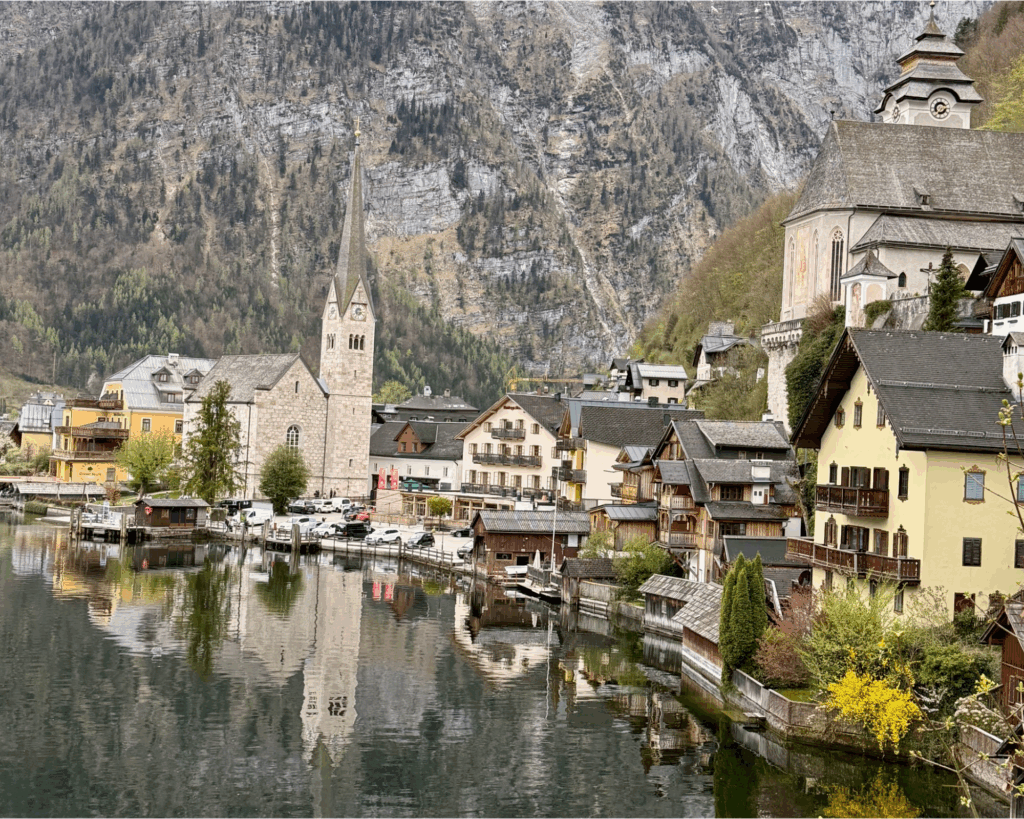
There’s a moment when Hallstatt first comes into view that simply steals your breath. The village doesn’t just sit by the water, it clings to the cliffs as though it grew there naturally, every roofline and balcony layered like a postcard. In spring, the town was picturesque with flowers from window boxes, ivy across stone walls, and the lake mirrors it all with an almost dreamlike stillness.
It’s not just the scenery…it’s the atmosphere. It’s so quaint and charming with church bells echo off the mountains, from a tiny bakery, swans swimming in the lake and locals pedaling past on bicycles that look older than you are. You see the pictures, the Instagram posts and this little town in the Alps lives up to the hype.
The history and heritage
Salt has shaped Hallstatt for thousands of years. People mined here over 7,000 years ago, creating tunnels in the Hallstatt High Valley. They sent “white gold” across the Alps.
The Iron Age Hallstatt culture, from 800–450 BCE, named after this valley. Salt preserved textiles, tools, and grave goods. These items still help archaeologists today.
The village and the Dachstein–Salzkammergut landscape are UNESCO World Heritage Sites. They show where industry meets nature. Timber houses and boathouses reflect the salt wealth.
Many attractions in Hallstatt show its rich history. This makes the past feel close and real.
Faith has also left its mark. The Catholic parish church of the Assumption stands tall. It has Gothic and Baroque details.
Nearby, the Evangelical church has a slender spire. It’s a famous sight in postcards and guides. The Charnel House, or Beinhaus, holds painted skulls. This custom started when the cemetery was full.
Trade routes once connected Hallstatt to the Danube. Salt went downstream, and ideas came back. This exchange made Hallstatt a strong mountain town.
Today, visitors from all over come to see its heritage.
Things to Do in Hallstatt
Browse Local Shops
From salt-based beauty products to hand-carved wood souvenirs, Hallstatt’s tiny boutiques are worth a browse before you go.
Stroll the Historic Market Square (Marktplatz)
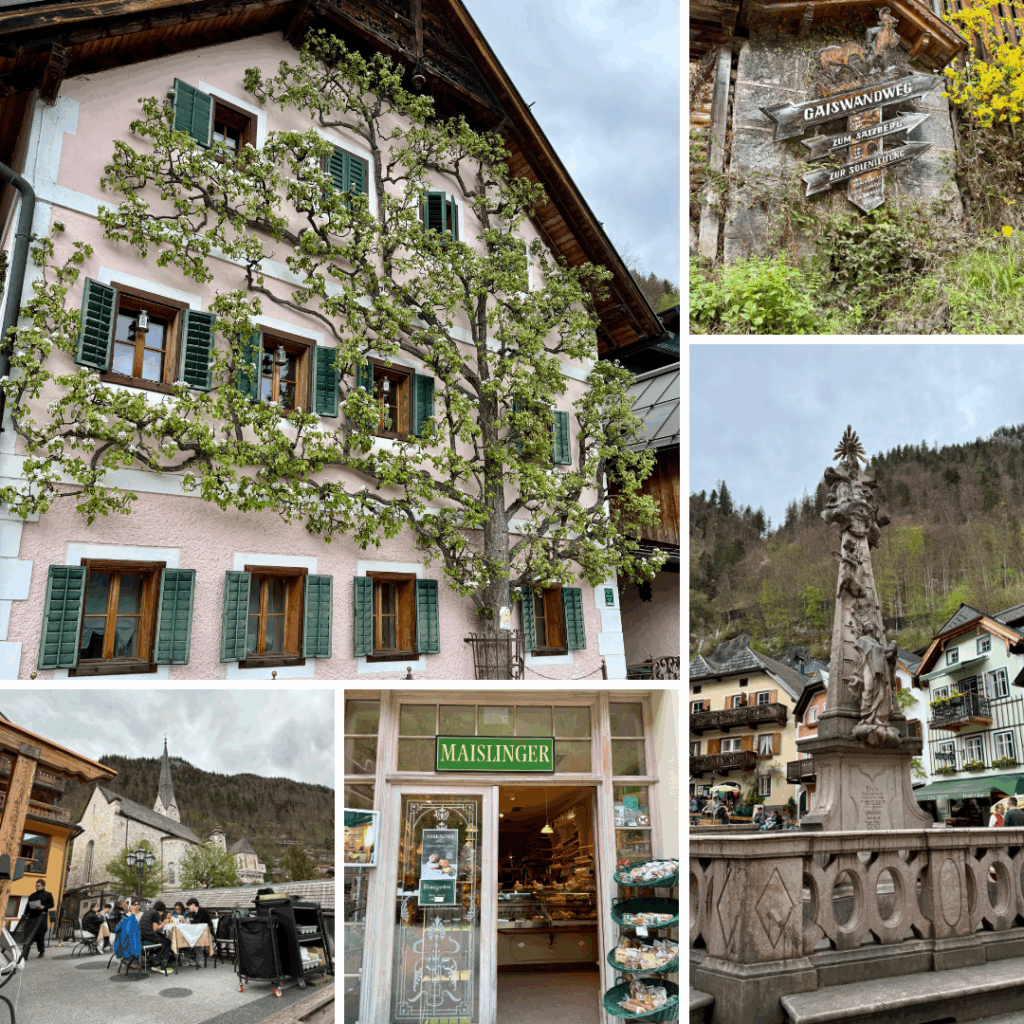
This is the storybook heart of Hallstatt, cobblestone streets, pastel façades, and flower boxes so perfect they look staged. Come early before the day trippers flood in and you’ll have it almost to yourself.
Capture the Famous Viewpoint
Head north from the square until you reach that postcard-perfect view of the Evangelical Church framed by mountains and lake. Early morning is magic here, the reflections on Hallstätter See are flawless.
Ride the Funicular to the Salt Mine
Hallstatt’s salt mine is the oldest in the world, with 7,000 years of history. The funicular ride offers incredible lake views, and the tour takes you through tunnels, miner slides, and the fascinating “white gold” story.
Step onto the Skywalk ‘Welterbeblick’
While you’re up at the salt mine, the Skywalk juts out over the cliffs with panoramic views that make you feel like you’re hovering above the lake.
Visit the Hallstatt Ossuary (Bone House)
A tiny chapel filled with over 1,200 hand-painted skulls might not be everyone’s cup of tea, but it’s uniquely Hallstatt. This tradition dates back centuries when burial space was scarce.
Take a Boat Out on the Lake
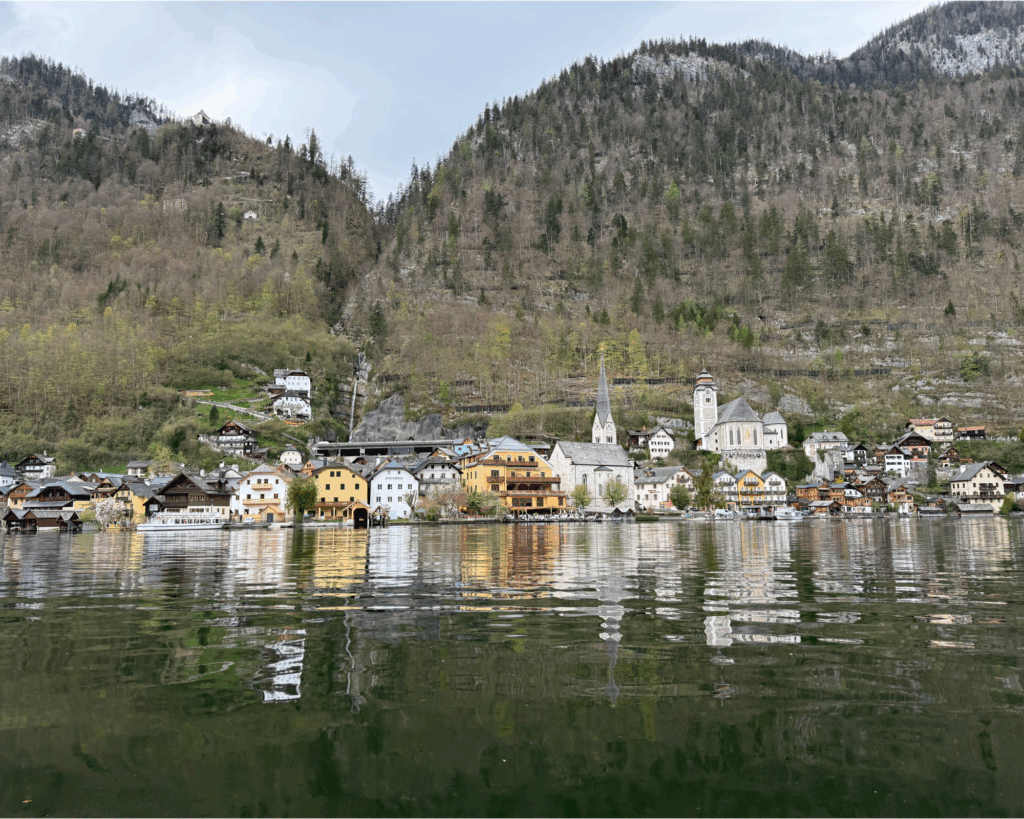
We opted for a small local wooden boat and there’s something about being out on Hallstätter See that makes you fall even harder for the village. You can also rent electric boats or join a guided cruise.
Wander the Lakefront Promenade
A leisurely stroll along the water rewards you with quiet benches, unexpected viewpoints, and that “I could live here” feeling.
Pop Into the Evangelical Church
You’ve probably already taken a dozen photos of its pointed steeple from the outside, but it’s worth stepping inside for a quiet moment.
Hike the Echerntal Valley
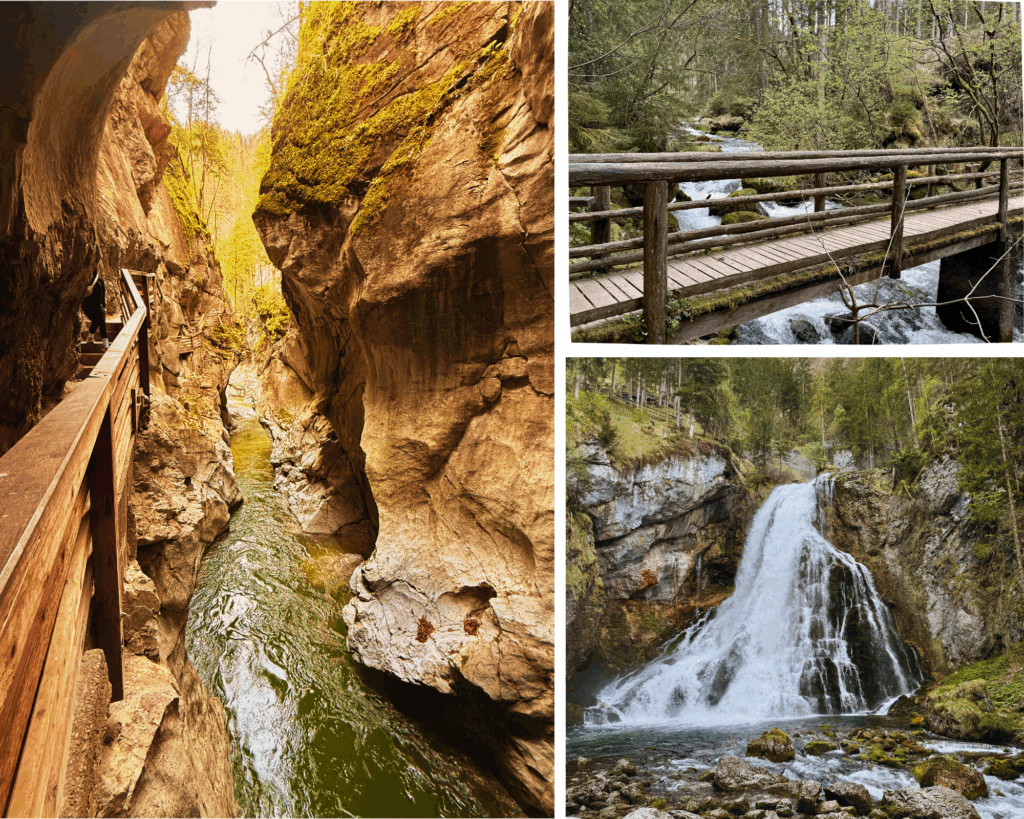
If you have extra time, this scenic trail leads to the Waldbachstrub Waterfall. A peaceful detour if you want to trade village chatter for rushing water.
Where to eat
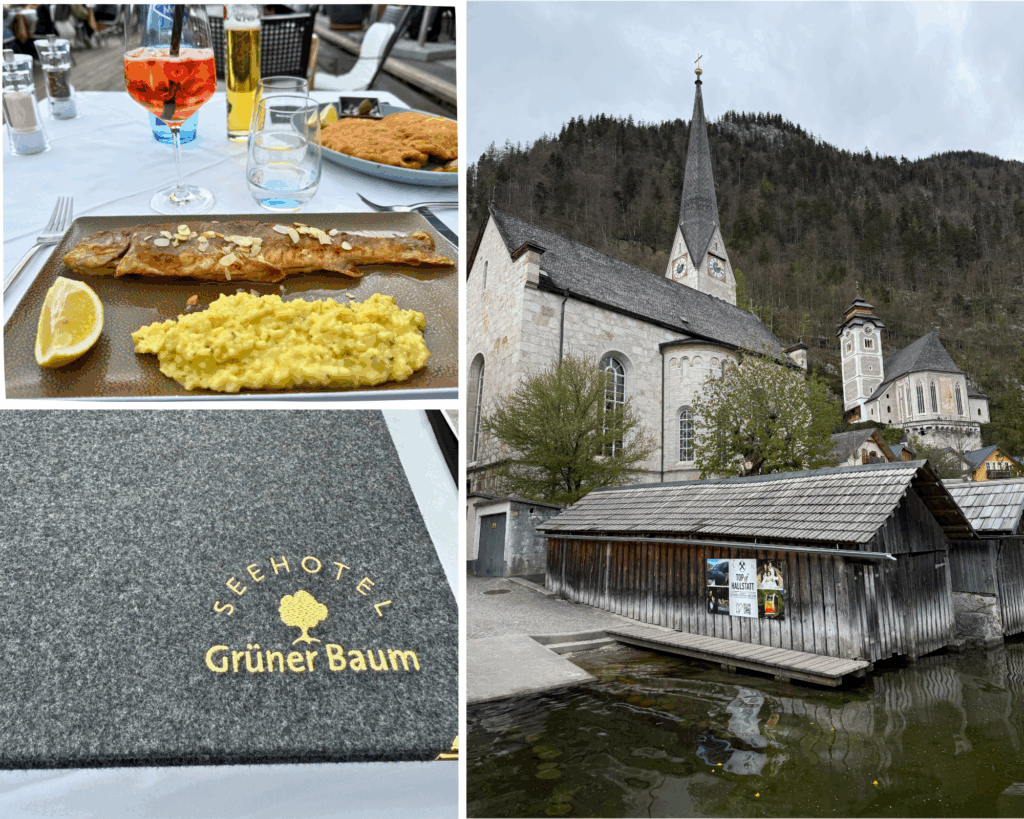
We grabbed lunch at See Cafe ($$$) and honestly, it was one of those meals that makes you pause mid-bite and look around to take it all in. Sitting outside with the lake at the edge of the terrace, swans swimming by, we enjoyed over fresh local fish and crisp Austrian wine, wishing we could stop time.
Other Hallstatt favorites worth checking out:
Maislinger – A local bakery and café perfect for a quick coffee and something sweet.
Restaurant im Seehotel Grüner Baum – Lakeside fine dining with a focus on local flavors.
Brauhaus ($$) – Austria’s oldest tavern, dating back to the 15th century. Think hearty, traditional plates in a cozy wood-paneled space.
If We Stayed Overnight
If we were planning a longer stay, and seeing these hotels in person, these are the top of my list:
Hallstatt Hideaway ($$$)– Adults-only luxury with lakefront balconies.
Heritage Hotel Hallstatt ($$) – Right on the lake with modern comforts inside historic buildings.
Seehotel Grüner Baum ($$$)– Romantic, upscale, and steps from the Market Square. Stunning views and excellent restaurant
Best Time to Visit: Seasons, Crowds, and Weather
Spring (April–May) brings thawed lakes and bright colors. Temperatures are in the high 40s to low 60s °F. Don’t forget a waterproof for the occasional shower. We visited in the spring and flowers were in bloom, the weather cool but pleasant, and outdoor cafés and markets in full swing. The mountains still had a dusting of snow. .
For a day trip to Hallstatt, mornings are best. Book your ferry early and check the mountain weather.
Summer (June–August) is warm and lively. Days are in the 70s °F with long evenings. It’s the busiest time, so plan wisely. Start early, take a break at lunch, or stay late to avoid the crowds. This way, you can enjoy Hallstatt without the rush.
Fall (September–October) offers crisp air and beautiful leaves. Temperatures are in the 50s–60s °F. Mornings are misty, adding to the charm. It’s a great time to explore Hallstatt without the crowds. Trails and viewpoints are peaceful.
Winter (November–March) is quiet, except for holidays. Roofs are snow dusted, and days are short. Some attractions have limited hours. Hallstatt in winter looks like a snow globe come to life. Christmas markets, twinkling lights, and a dusting of snow over the rooftops? It’s now on my return list..
Our Road Trip to Get There
We left Salzburg early and took the scenic route, winding through mountain valleys and stopping at waterfalls and gorges along the way. Each little village felt like it had its own charm about it, a bakery with fresh pastries here, a hidden chapel there.
If we’d had more time, we would have stopped at the famous Dachstein Suspension Bridge for those mountain views I saw on Instagram. Even without it, the drive was as much a part of the adventure as Hallstatt itself.
From Hallstatt, we continued on toward Vienna, stopping whenever something caught our eye because some of the best travel memories are born from detours.
Practical Tips
Start early to beat the crowds. Try to get there before 9 a.m. in busy months. Hallstatt’s old town is car free, so follow signs for shuttles and paths. Parking is limited and fills up fast
Check the hours for the Skywalk, Salzwelten salt mine, and museum. Winter hours might be shorter or change with the weather. Buy tickets online for the funicular and salt mine to save time.
Wear comfy shoes and a light jacket. It can rain or be windy.
If you don’t like crowds, eat lunch at noon or after 2 p.m.
Bring cash for street vendors and bakeries. Most places take cards, but small shops might not.
If driving, have a valid Austrian vignette for the A10. Check ASFINAG for traffic updates. If it rains, visit the Welterbemuseum, cozy cafés, or take a scenic trip to Bad Ischl.
Be flexible with your plans for lake views and relaxing on the Marktplatz.
With these tips, you can enjoy more of Hallstatt without the stress.
Final Thoughts
Hallstatt is the kind of place that makes gasp as soon as you arrive. I was in awe of it’s charm, history and beauty around every corner. This fairytale town isn’t not just about checking off sights, it’s about enjoying a long lunch in a lakeside café, taking in the culture and wandering without a plan.
If I could do just one thing again, it would be that quiet boat ride across the lake, where the whole village seemed to float in the reflection below it.


Leave a Reply